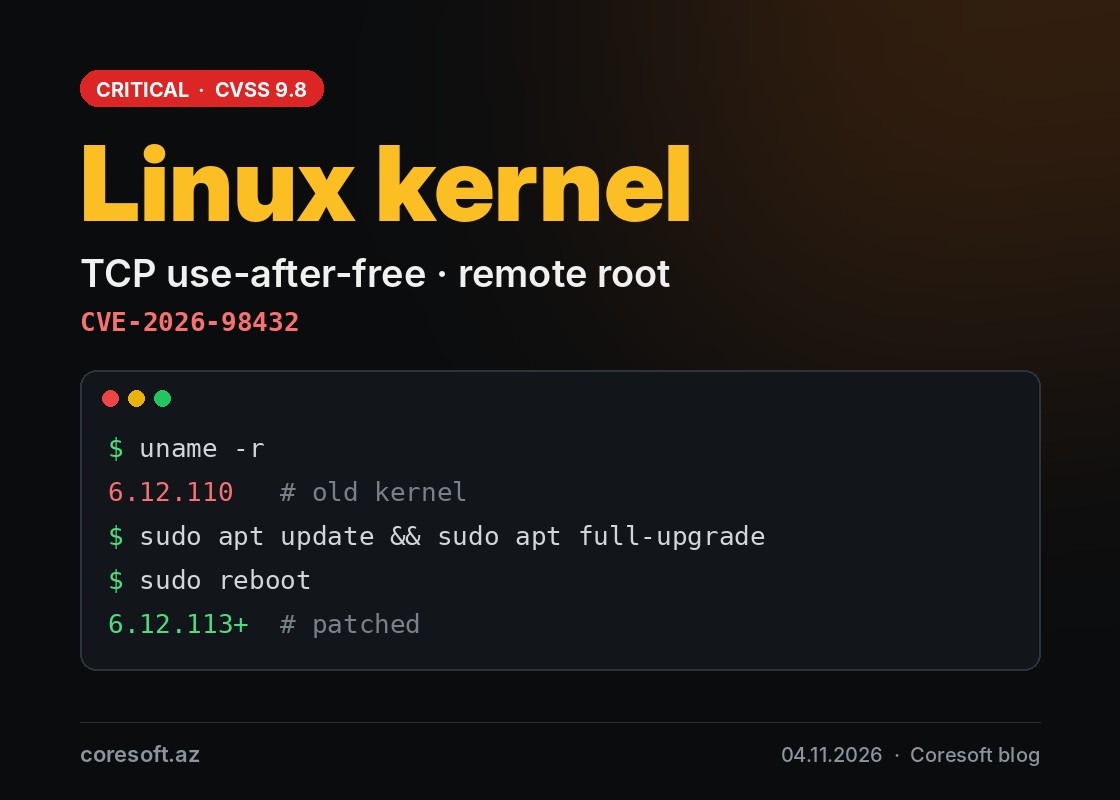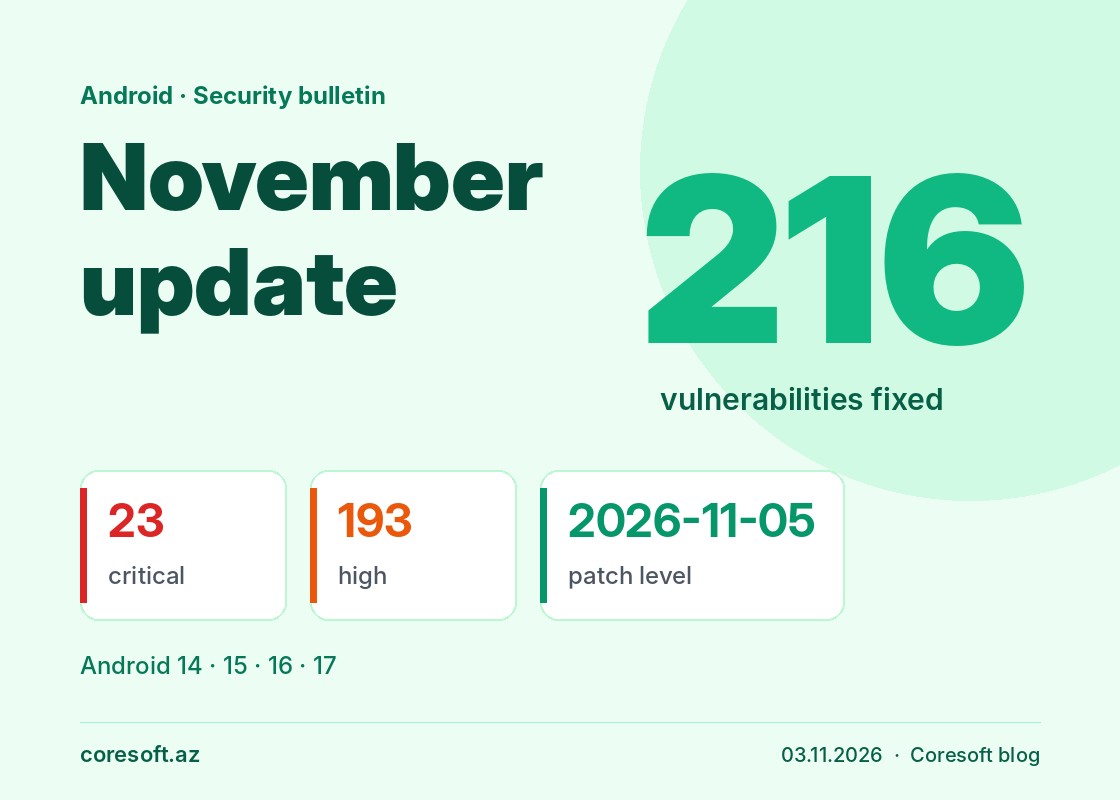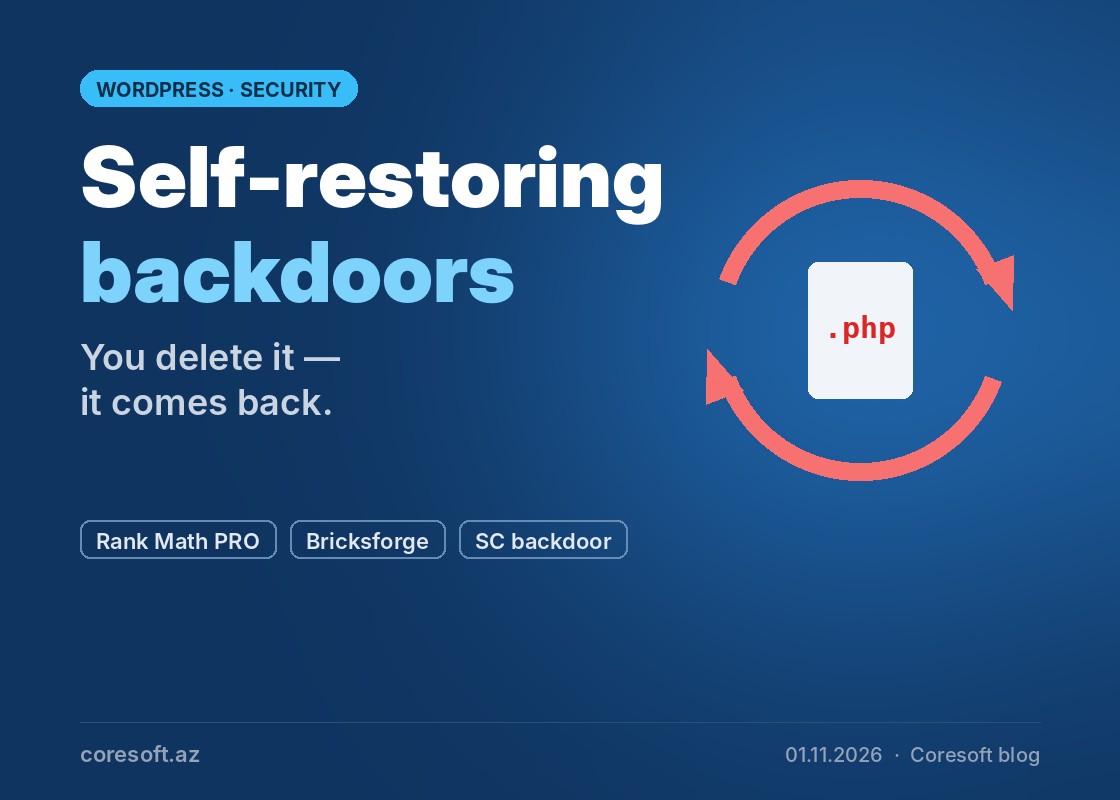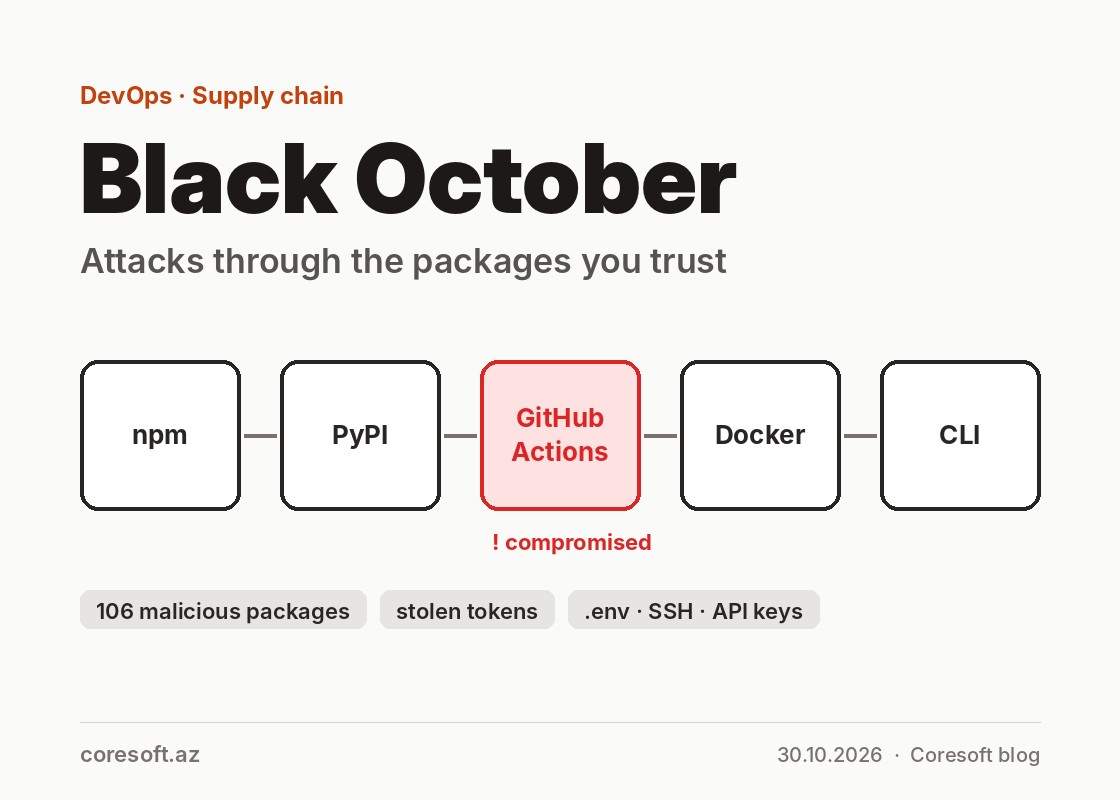
October was a very tense month for software supply chain attacks. Instead of breaking into a site or server directly, attackers place malicious code in the packages, GitHub workflows and CLI tools that developers install every day.
A few examples: the PyPI and Docker packages of LiteLLM, widely used in AI projects, were served as a malicious version for about an hour and a half. Release files of the OVHcloud CLI were replaced through a hijacked contributor account. Some npm packages spread like a worm, publishing new versions of themselves. Between 26 and 28 October alone, GitHub published warnings about 106 malicious npm and PyPI packages.
The target is almost always the same: .env files, SSH keys, cloud and GitHub tokens, API keys. A token stolen once becomes the key to the next attack.
What to do
- Pin versions: use lock files and
npm ci, and don't rely on thelatesttag. - Don't adopt a brand-new version right away; waiting a few days lowers the risk a lot.
- If a malicious version was installed, treat every secret on that machine as stolen and change them from another device.
- Check GitHub for unknown workflows, tokens and OAuth apps.
Support from Coresoft
The Coresoft team audits the security of CI/CD pipelines and servers, puts the storage and rotation of secrets in order and sets up safe dependency management. To use this service, contact us.