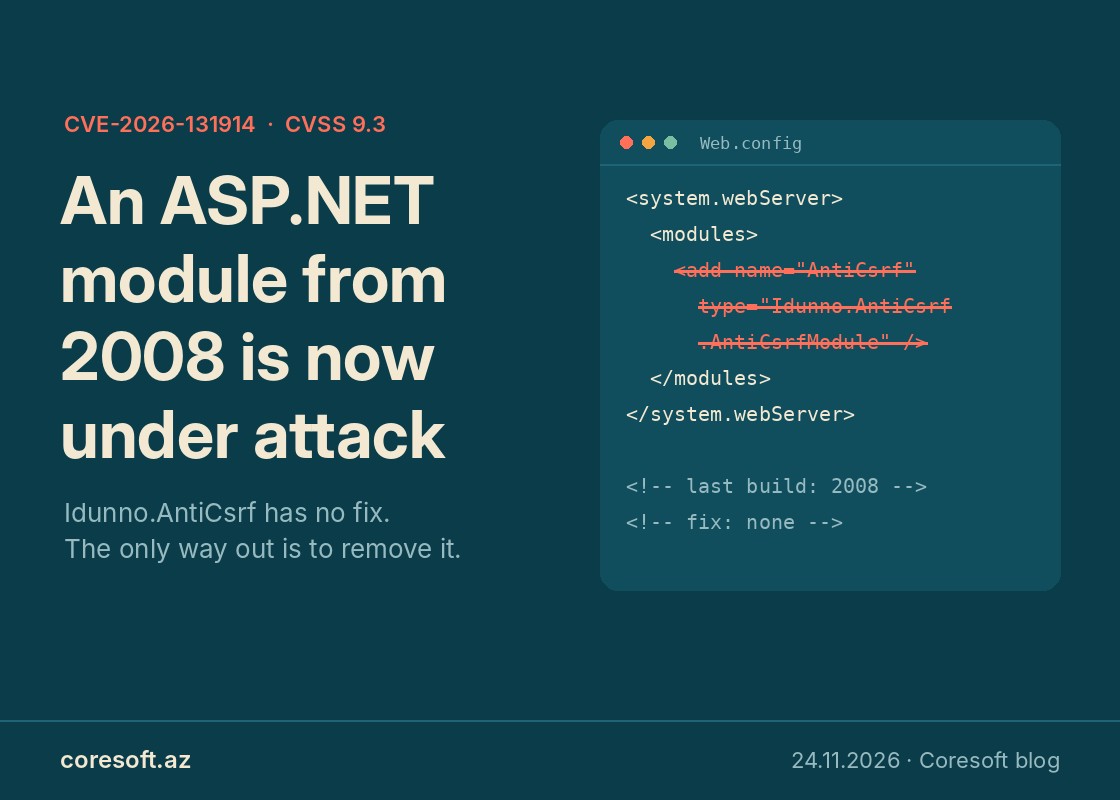
On 18 November Mandiant disclosed a critical flaw in Idunno.AntiCsrf, a module used on ASP.NET WebForms sites. CVE-2026-131914 scores 9.3 on the CVSS 4.0 scale. Sites add this module to protect themselves from CSRF attacks, but in every version up to and including 0.9.1 Beta it becomes an entry point itself. Mandiant says the flaw is already being exploited in real attacks; nothing has been disclosed about the attackers or the victims.
The cause is simple: the module deserializes the token from a POST request without any signature check, and it does so before the page's own code runs. An unauthenticated user can send a crafted request and run code as the IIS worker process (w3wp.exe). From there it is not hard to drop a web shell or take the machineKey and database passwords stored in Web.config.
The worst part is that no fix is coming. The project's last official build dates from December 2008 and nobody maintains it. The only way out is to remove the module: delete the httpModules/modules entries and the csrfSettings section from Web.config, take Idunno.AntiCsrf.dll out of the bin folder, and replace CSRF protection with a supported mechanism such as ViewStateUserKey or IAntiforgery in ASP.NET Core. Search by file name, because rebuilt copies have different hashes. Do not forget backups.
If the module was on your site, check the IIS logs for unusually large POST requests to .aspx pages that got a 302 or 500 response, and look for newly created files in the site folder. If anything looks suspicious, preserve the logs first, then rotate the machineKey and the database passwords.
This is a familiar lesson for older projects: a site that has been running for years often still carries libraries someone added long ago and everyone has forgotten. Reviewing the dependency list from time to time cuts hours off the response when news like this breaks.